


Season Two
Day Two After the Constitution Fell
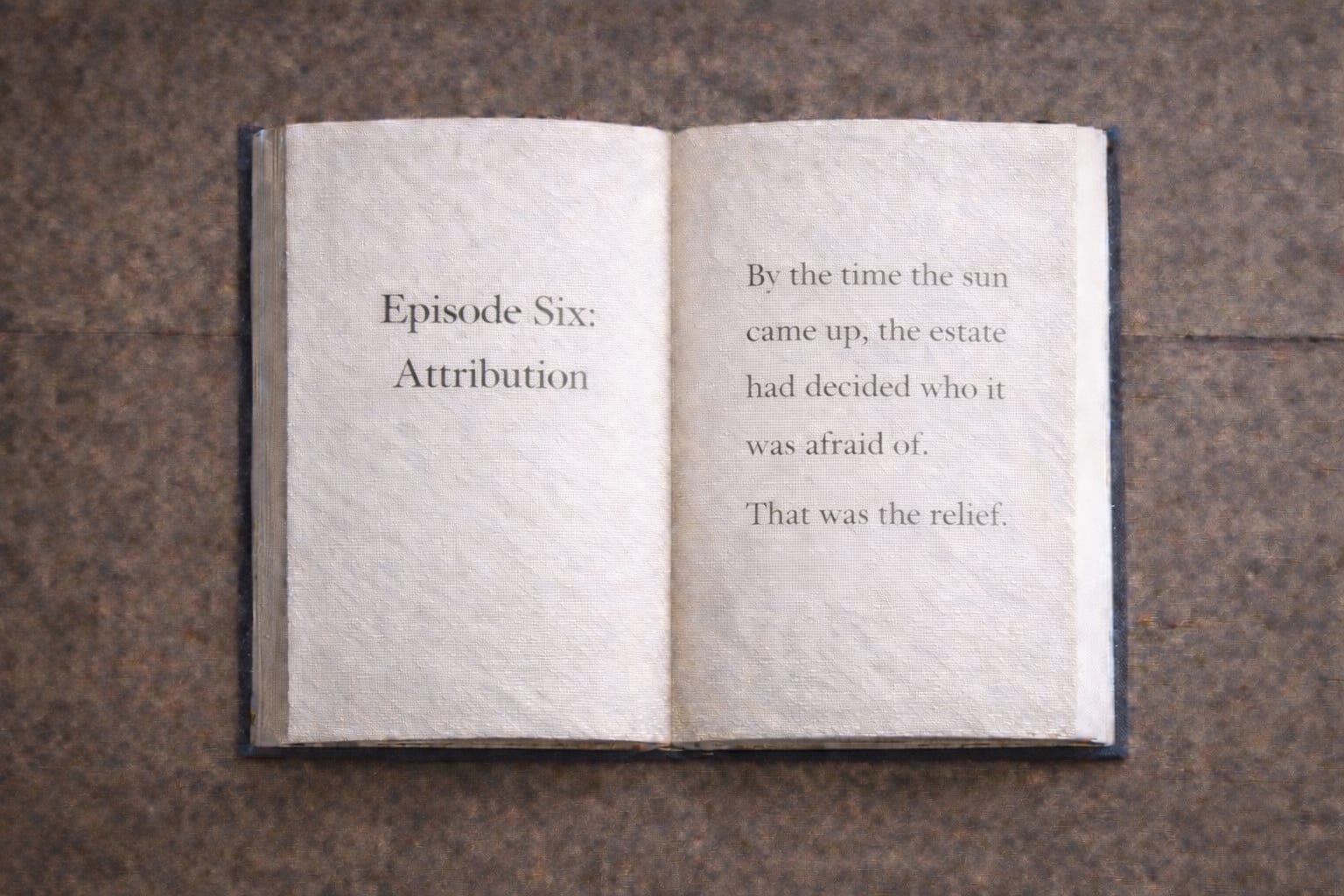
By the time the sun came up, the estate had decided who it was afraid of.
That was the relief.
Fear without a target was exhausting. Fear with a target was actionable.
Lila stood at the edge of the service road watching the cleanup finish its work. The caretaker’s cottage no longer looked burned—it looked removed. Charred beams stacked neatly. Ash shoveled into drums. Evidence processed with the efficiency of people who had done this before in other contexts.
A man she didn’t recognize checked off a clipboard.
“Where’s the body going?” she asked.
He didn’t look up. “Handled.”
“That’s not an answer.”
He smiled politely. “It’s the only one you’re going to get.”
Inside the main house, attribution was underway.
Not investigation.
Not justice.
Attribution.
Claire sat at the table again, hair perfect, voice steady, eyes dull with a new kind of focus.
“We are not dealing with one problem,” she said. “We’re dealing with interference.”
That word moved faster than any rumor had.
Someone nodded. Someone else leaned in.
“External,” a man said. “Or internal.”
“Both,” Claire replied. “Which is worse.”
The observer stood in the back of the room—not invited, not challenged—listening.
“Staff movements,” someone said.
“Unscheduled access,” said another.
“Radicalization,” offered a third, without irony.
Lila entered late.
All conversation paused.
That was new.
Claire smiled. “We were just discussing risk mitigation.”
Lila scanned the room. “You’re deciding who did this.”
“We’re deciding who benefits from disorder,” Claire said.
“That’s not the same thing.”
Claire tilted her head. “It is when order is the asset.”
Evan stood near the wall, arms crossed, watching the math happen in real time.
“You’re correlating unrelated events,” he said carefully.
Someone snapped, “There’s no such thing as unrelated.”
That sentence locked into place like a keystone.
Outside, security repositioned.
Not toward the perimeter—inward.
Mateo noticed first.
He watched guards shift their stance, their lines of sight overlapping in ways that didn’t protect the gates. They protected the houses.
He felt the weight of something settling—like when a crowd turns before it runs.
Inside the pool house, a woman sobbed quietly while another held her and whispered reassurances that sounded more like instructions.
“You don’t say anything,” she murmured.
“You don’t remember it that way.”
“You were confused.”
Memory laundering.
Lila stood in the doorway and understood how this worked now.
Not violence first.
Narrative first.
She turned and walked straight into the observer.
He was smiling, faintly.
“You see it,” he said.
“Shut up.”
He leaned in. “They don’t need to know who did it. They just need to know who allowed it.”
“Who?” she demanded.
He glanced toward the service road. Toward staff housing. Toward people without last names engraved in stone.
“They always choose downward,” he said softly. “Gravity’s most reliable force.”
A radio crackled.
“Possible breach near the south fence,” a voice said. “Unconfirmed.”
Claire looked up. “There.”
There it was.
A cause.
Security moved immediately—not because the breach was real, but because it was useful.
Lila felt it then—the switch from panic to purpose.
She ran toward the fence anyway.
She found nothing.
No cut wire.
No footprints.
No breach.
But when she returned, it didn’t matter.
The story had already been told.
A young staffer was being questioned near the stables. Hands shaking. Voice cracking. Saying the wrong things because he didn’t know the script.
“I didn’t mean—”
“I was just—”
“I didn’t know—”
Those words never saved anyone.
Mateo watched from behind a tractor, heart hammering.
Lila stepped forward. “This is wrong.”
A man in a blazer turned to her. “We’re protecting the community.”
“You’re creating a scapegoat.”
He smiled patiently. “You say that like it’s a bad thing.”
She realized then that this was the choice point.
Not the violence.
The direction.
The observer stood back, eyes bright, cataloging every face, every hesitation.
Someone struck the staffer.
Not hard.
Not publicly.
Just enough.
The room inhaled as one.
Then exhaled.
No one stopped it.
That was the sound of the line breaking.
Lila moved—but two guards stepped in her path.
“Stand down,” one said quietly.
She looked past them. “This isn’t security.”
One guard avoided her eyes. The other didn’t.
“It is now.”
Outside, the fire pit flared again—someone had thrown something on it that burned too fast and too hot.
Papers.
Inside the main house, a decision was reached without being named:
This would be blamed on internal disruption with external encouragement.
A phrase that could mean anything.
Or anyone.
The observer stepped close to Lila, voice barely audible.
“They’ll bury more than bodies tonight,” he said. “They’ll bury their last excuse.”
“What do you want?” she whispered.
He glanced toward the house. Toward the staff quarters. Toward the fire.
“I want to know who helps them,” he replied. “Because helpers always think they’re temporary.”
A scream cut through the grounds.
This one didn’t stop.
Lights flickered.
Radios screamed with overlapping commands.
Someone shouted, “Lock it down!”
Someone else yelled, “Get them out!”
No one agreed on who them was.
And in that confusion—deliberate or not—violence finally found momentum.
Lila ran toward it, knowing it was already too late.
Behind her, the observer turned away.
He had what he needed now.
Names.
Patterns.
Leverage.
The estate was no longer insulated.
It was ignited.